Sam Hayes · 12 October 2026
Optimizing Artificial Lighting Protocols to Counteract Polar Night Effects in Government Office Settings
Government offices in Arctic and sub-Arctic regions experience extended periods of darkness known as polar night, during which the sun remains below the horizon for weeks or months, and administrators have responded by refining artificial lighting systems to support worker circadian rhythms and operational continuity. Research from institutions such as the Finnish Institute of Occupational Health shows that controlled light exposure influences melatonin suppression and alertness levels in populations north of the Arctic Circle. Data collected across multiple sites indicates that offices in northern Canada and Norway implement timed lighting schedules starting in October to align with the onset of reduced daylight.
October 2026 marks the beginning of polar night preparations in several administrative centers, where facility managers adjust lighting intensity and color temperature according to protocols developed from longitudinal studies on shift workers. These protocols typically combine high-intensity blue-enriched light during morning hours with warmer, dimmer tones in the afternoon to mimic natural seasonal transitions. Observers note that such adjustments occur in facilities ranging from municipal buildings in Fairbanks to regional government complexes in Tromsø.
Core Components of Lighting Protocols
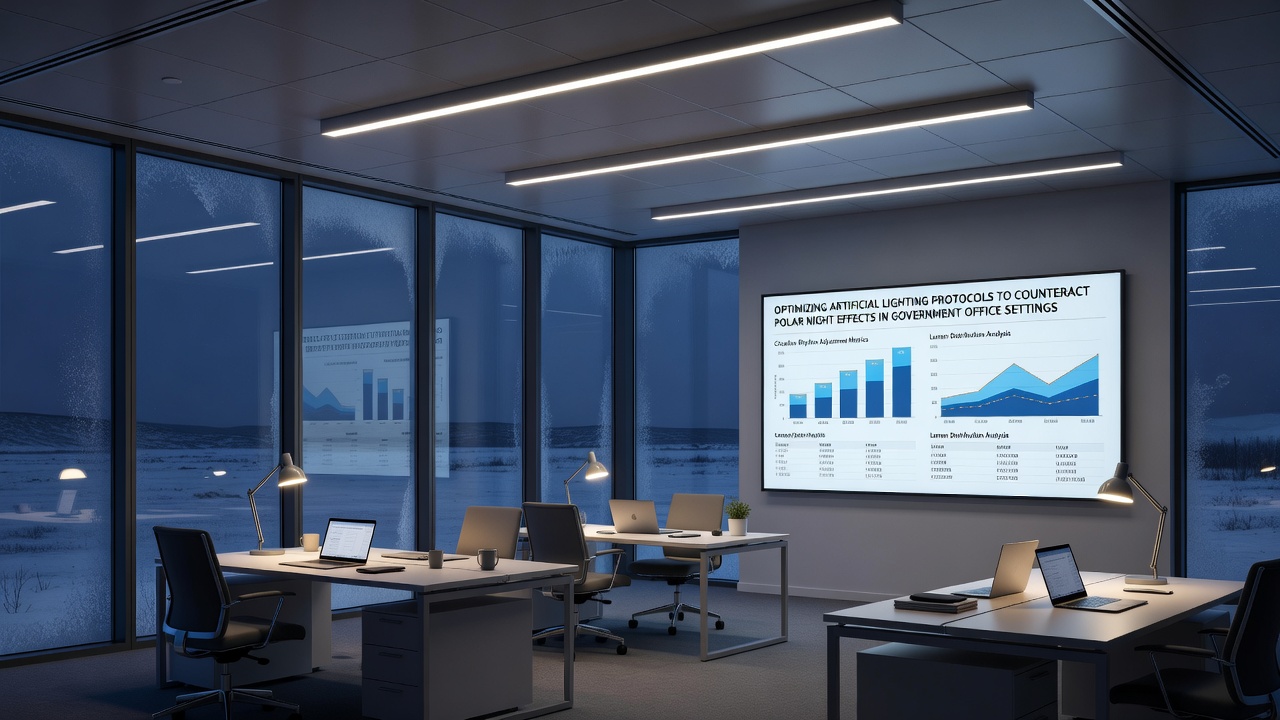
Effective protocols rely on layered lighting that includes overhead panels, task lamps, and supplemental wall-mounted units, while spectral tuning allows administrators to shift from 5000K to 6500K correlated color temperatures during peak activity periods. Studies conducted by the University of Alaska Fairbanks demonstrate that exposure to 1000 lux of blue-enriched light for two hours in the morning improves reaction times and reduces reported fatigue among office staff. Government buildings incorporate sensors that gradually increase illuminance from 300 lux at arrival to 800 lux by mid-morning, then taper levels as the workday progresses.
Timing schedules follow local sunrise data even when the sun does not appear, and software integrates astronomical calculations to trigger changes automatically. Canadian government guidelines recommend maintaining at least 500 lux at desk level throughout core working hours, with additional vertical illuminance on walls to support spatial perception. Facilities in Svalbard have adopted similar standards since 2023, resulting in documented consistency across multiple agencies.
Implementation Across Administrative Regions
Regional differences shape how protocols roll out, with northern European offices emphasizing spectral control while North American sites focus on distribution patterns that reduce glare on screens. In October 2026, several Canadian territories plan coordinated rollouts that include staff training on personal lighting adjustments, such as desktop lamps with adjustable color settings. Data from pilot programs shows that combining overhead systems with individual controls leads to higher compliance rates among employees.
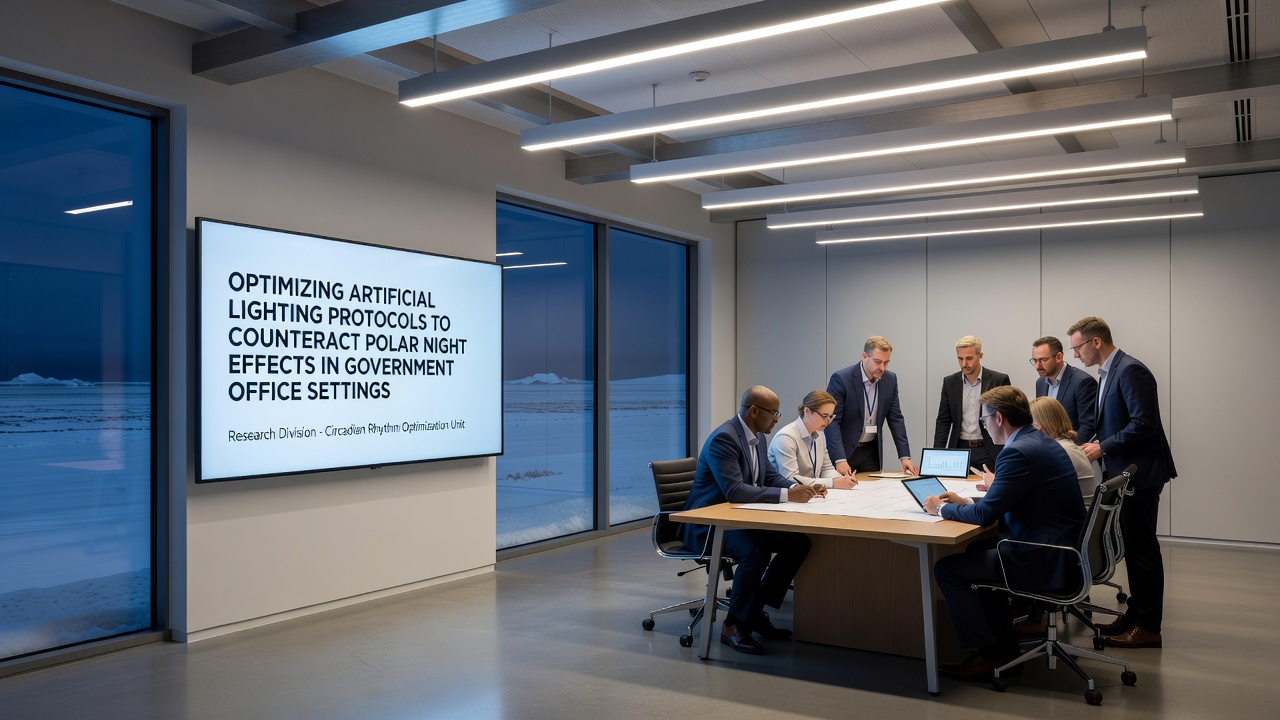
Integration with building management systems allows real-time monitoring of energy use alongside light levels, and administrators track both metrics to balance performance requirements with efficiency targets. The Arctic Council has referenced lighting optimization in its reports on sustainable infrastructure, noting that updated protocols in member states incorporate feedback from occupational health assessments conducted annually. Those assessments measure sleep quality indicators and cognitive performance markers before and after lighting interventions.
Measurement and Adjustment Practices
Facilities collect quantitative data through wearable devices and workstation sensors that record light exposure and correlate it with self-reported alertness scores. Researchers at the Norwegian University of Science and Technology have analyzed datasets spanning five winters and found consistent patterns where optimized lighting reduces seasonal variations in productivity metrics. Adjustments occur monthly during polar night to account for cumulative effects, with teams reviewing logs to fine-tune schedules for specific departments.
Training programs instruct staff on recognizing signs of insufficient light exposure, such as changes in concentration or sleep patterns, and encourage use of supplemental personal devices during breaks. Government procurement processes now specify luminaires with tunable spectra and high color rendering indices above 90 to support visual tasks involving detailed documents. These specifications appear in tender documents issued by agencies in both Greenland and northern Russia.
Conclusion
Lighting optimization in government offices during polar night continues to evolve through data-driven refinements and cross-regional collaboration, with protocols in place for October 2026 reflecting accumulated evidence from occupational studies. Administrators maintain these systems through regular calibration and staff input, ensuring that light environments support consistent performance across extended periods of darkness. Ongoing monitoring provides the basis for incremental updates that align with new research findings on human responses to artificial light in extreme latitudes.