Iris Peters · 28 September 2026
Permafrost Dynamics and Infrastructure Challenges for Data Centers in Arctic Administrative Zones
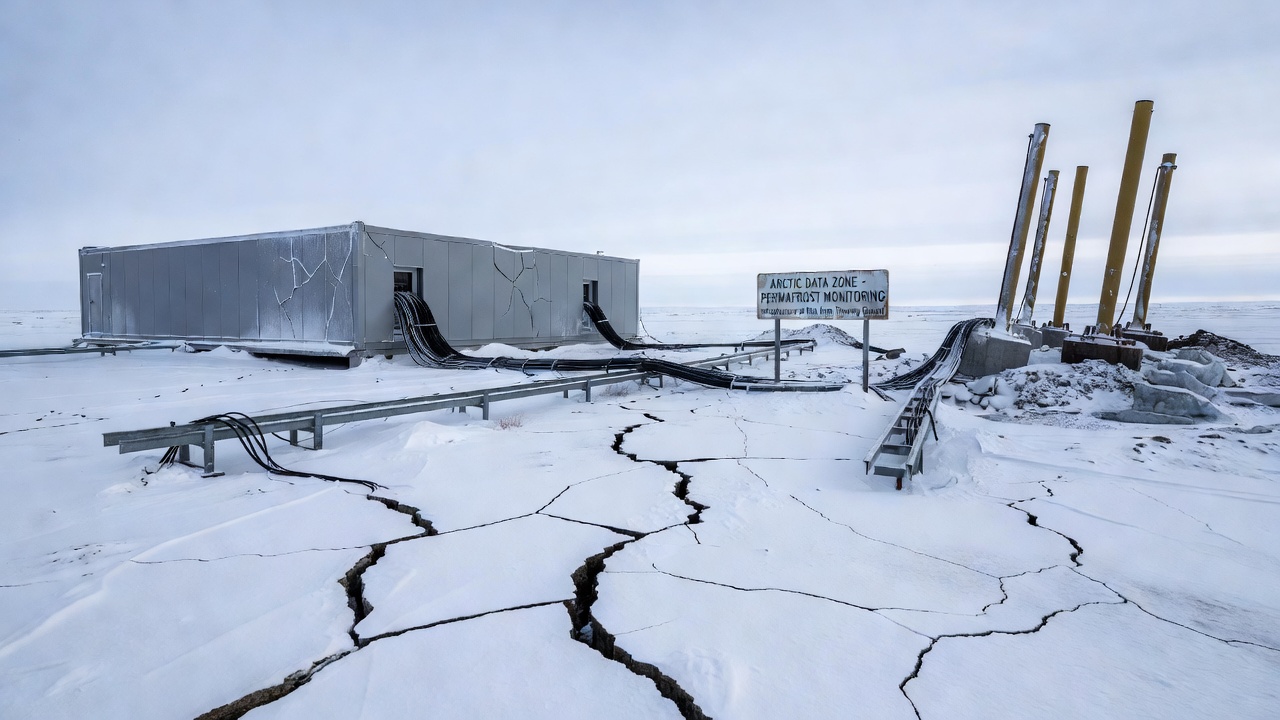
Permafrost covers vast stretches of land across Alaska, northern Canada, Russia, and parts of Scandinavia where administrative zones host critical data infrastructure, and recent monitoring data shows that rising ground temperatures cause the frozen soil to thaw at accelerated rates. Researchers tracking these changes note that the active layer above permafrost deepens each season which leads to ground subsidence, altered drainage patterns, and increased risk of structural damage to buildings and underground cabling. Data centers in these regions rely on stable foundations for servers, cooling systems, and power lines, yet the shifting ground creates uneven settling that can misalign equipment racks and disrupt fiber optic connections running between facilities and remote administrative offices.
Observed Changes in Permafrost Conditions
Studies conducted by international research teams document temperature increases of 2 to 4 degrees Celsius in permafrost layers since the 1980s across multiple Arctic sites, and satellite imagery combined with ground sensors reveals that thaw rates have intensified in administrative districts near the Arctic Circle. In September 2026 monitoring stations operated by agencies in Canada and Norway recorded record high soil moisture levels following unusually warm summer periods which contributed to further degradation of ice-rich permafrost. These shifts alter local hydrology so that previously stable terrain develops sinkholes and thermokarst lakes while drainage channels form new pathways that flood low-lying equipment areas during melt seasons.
Engineers responsible for site planning examine soil core samples from proposed data center locations to assess ice content, yet the dynamic nature of permafrost means conditions can change within a single decade and require ongoing reassessment. Government reports from Natural Resources Canada highlight how administrative zones in Yukon and Northwest Territories face particular pressure because many facilities were constructed on ground that is now actively thawing.
Direct Effects on Data Center Operations
Ground movement from thawing permafrost transmits stress to concrete pilings and slab foundations which can crack or tilt over time, and this instability threatens the precise leveling needed for raised floor systems that support heavy server loads. Cooling infrastructure often depends on chilled water loops buried in the ground or mounted on rooftops, so differential settling disrupts pipe alignments and increases leak risks that force unplanned shutdowns for repairs. Power substations feeding these centers experience similar issues when transformer pads sink unevenly, leading to connection failures that affect uptime metrics tracked by facility operators.
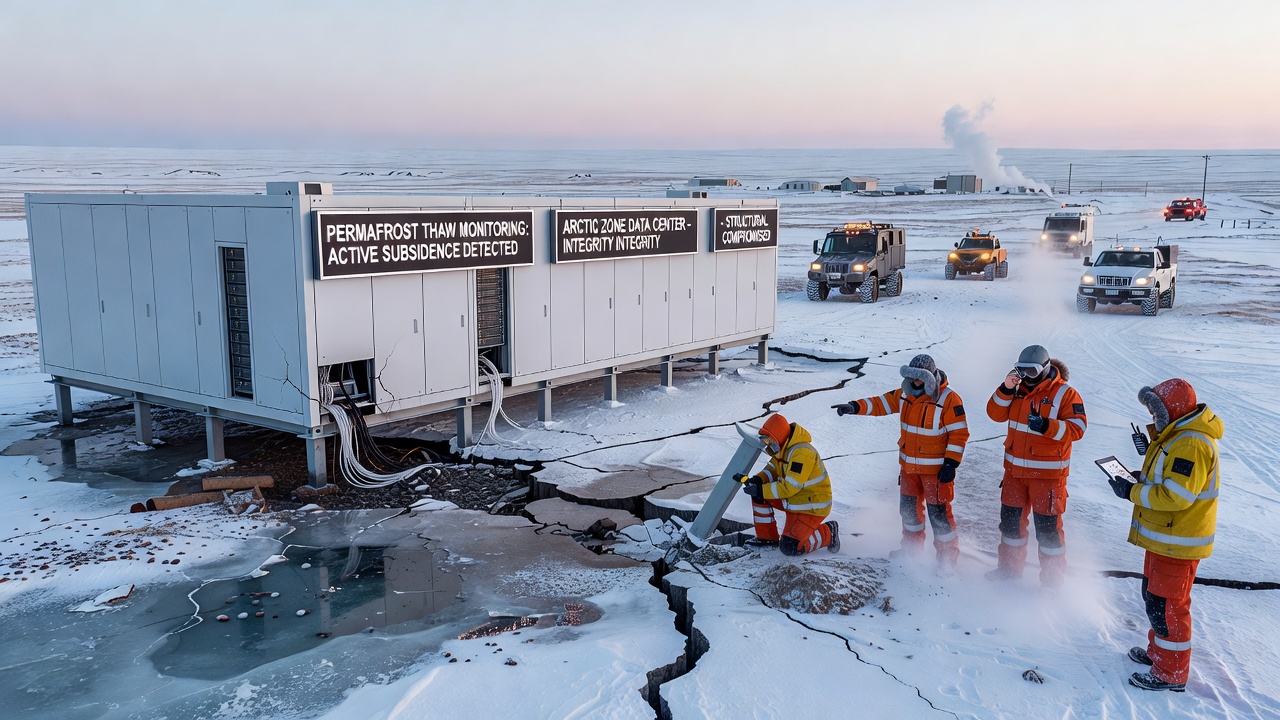
Network redundancy becomes harder to maintain when fiber routes cross zones of active thaw because cable trenches shift and expose lines to physical damage from ice lens formation or water infiltration. Operators in Russian administrative regions around the Yamal Peninsula have documented multiple incidents where transmission lines required rerouting after permafrost collapse altered the landscape, and similar patterns appear in Alaskan facilities managed under federal oversight. Administrative authorities respond by mandating updated geotechnical surveys every five years for existing sites, while new construction projects incorporate thermosyphon systems that extract heat from the ground to preserve frozen conditions beneath critical structures.
Adaptation Measures and Monitoring Practices
Facilities adopt elevated platform designs that decouple buildings from direct ground contact, allowing air circulation underneath to reduce heat transfer into the permafrost, and this approach appears in several Canadian Arctic administrative centers where data hubs support government cloud services. Remote sensing technologies including interferometric synthetic aperture radar provide continuous deformation maps that alert operators to early signs of ground movement before visible damage occurs. Research institutions such as the Norwegian Polar Institute publish annual assessments that help planners prioritize reinforcement projects in zones showing the fastest thaw progression.
Backup power generators and fuel storage tanks receive additional structural bracing because even minor tilting can compromise fuel lines and safety systems during extended outages. Administrative regulations in affected zones now require contingency plans that account for seasonal access limitations when roads become impassable due to subsidence or flooding from melting ground ice. Collaborative programs between industry groups and academic partners test new foundation materials that accommodate gradual movement without catastrophic failure, and these efforts draw on field data collected from multiple countries to refine engineering standards.
Conclusion
Permafrost shifts continue to reshape the operational environment for data centers located in Arctic administrative zones, and ongoing measurement programs provide the data needed to guide infrastructure decisions. Facilities that integrate real-time ground monitoring with adaptive construction techniques maintain higher reliability despite changing soil conditions, while regions without updated assessments face elevated risks of service interruptions. International coordination on permafrost research supports shared knowledge that benefits operators across borders, and the pace of environmental change ensures that monitoring and mitigation remain central to long-term planning in these northern locations.